Refinance calculators

Usable Equity Calculator: How Much Can I Refinance?

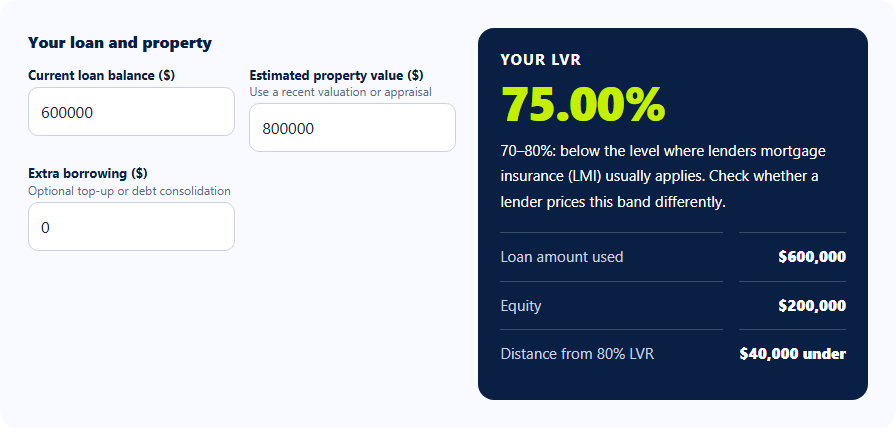
Most lenders will consider refinancing up to 80% of your property's value without lenders mortgage insurance. Your usable equity is that amount minus your current loan balance, but the final limit also depends on whether your income can support the repayments.

Your property and loan

Usable equity

–

Total equity
–
Loan amount at selected LVR
–
Current LVR
–

Estimates only, based on the figures you enter. This is general information, not credit or financial advice, and not a lender quote. See the calculator disclaimer.

How usable equity is calculated

Usable equity = property value × maximum LVR − current loan balance. On a $900,000 property with a $500,000 loan, 80% of the value is $720,000, so usable equity is $220,000.

Total equity is the full difference between value and loan ($400,000 in the example). Lenders rarely let you borrow against all of it, so usable equity is the more realistic figure. CommBank explains equity and additional borrowing.

What limits how much you can refinance

  • Serviceability: the lender checks that your income covers the higher repayments after living expenses and other debts, using an interest rate buffer above the actual loan rate. This calculator does not assess serviceability.
  • Valuation: the lender's valuation sets the property value, and it may differ from your estimate.
  • Purpose: lenders ask what the extra money is for, such as renovations, investing or consolidating debts, and some purposes have different policies.
  • LVR limit: borrowing above 80% usually adds lenders mortgage insurance, and fewer lenders offer it for refinances.

Common reasons to access equity when refinancing

  • Renovations: borrowing at a home loan rate can cost less than a personal loan, but the debt runs over a longer term.
  • Consolidating debts: rolling car loans or credit cards into the mortgage can lower repayments, yet you may pay more interest overall if you take decades to repay them.
  • Investing: equity can fund a deposit on an investment property. Get tax and financial advice for your circumstances.

Before you borrow more, compare repayments on the larger balance and check your LVR after the top-up. A lower rate can still mean higher repayments when the balance grows.

Turn the estimate into your next step

Before accessing equity, work through the investment-property guide and compare the repayment commitment on the larger loan. The refinancing process guide explains the next application and settlement steps.

Frequently asked questions

How much equity can I take out when refinancing?

Many lenders will lend up to 80% of the property value without LMI, so usable equity is usually 80% of the value minus your current balance. Your income, expenses and the lender's policies decide the final amount.

Can I borrow more than 80% of my home's value?

Some lenders allow up to 90% or more with lenders mortgage insurance. The LMI premium can be large, so compare it with the benefit of the extra borrowing.

Does refinancing to access equity increase my repayments?

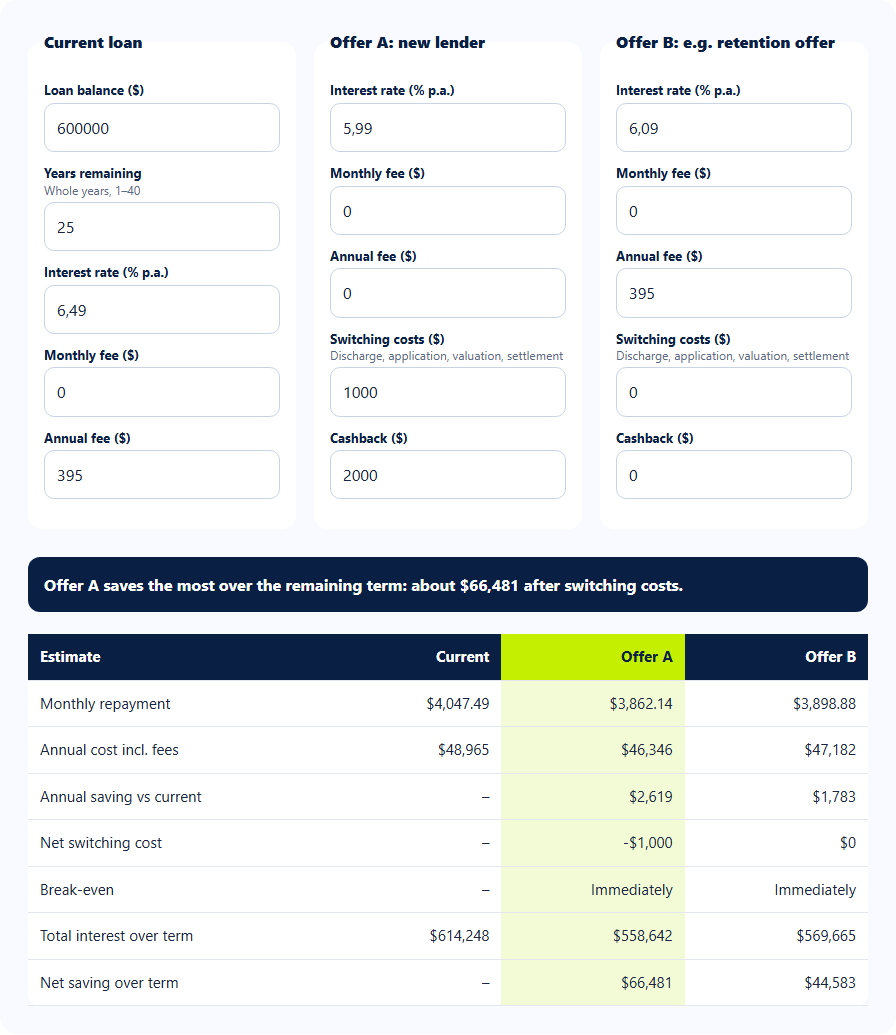
Usually, yes. A larger balance means larger repayments even if the new interest rate is lower. Use the main refinance calculator to compare the old and new repayments.

Is equity the same as cash in the bank?

No. Equity is the property value minus the home loan balance. Accessing equity through a refinance means taking on additional borrowing secured against the property; interest and lender approval apply.

How accurate is this equity calculator?

It applies the formula exactly, but the result depends on the property value you enter. Lenders use their own valuation and assess your income, so treat the figure as a starting point.

Portrait of Sana Hosseni

Sana Hosseni is a mortgage broker with more than 23 years of experience and an elected director of the MFAA Board. More about Sana and these calculators.

Continue exploring

Where will your next move take you?

Choose the calculator or guide that helps you understand your next refinance decision. Browse all calculators or explore the guides.