Refinance Calculator AU


How to prepare a home loan refinance checklist
Gather the current loan and property records
Find your current loan statement, balance, interest rate, remaining term and repayment frequency. Record recurring fees and any fixed-rate expiry date. Gather the property details and statements for other loans secured against it.
Collect written rates and itemised fees
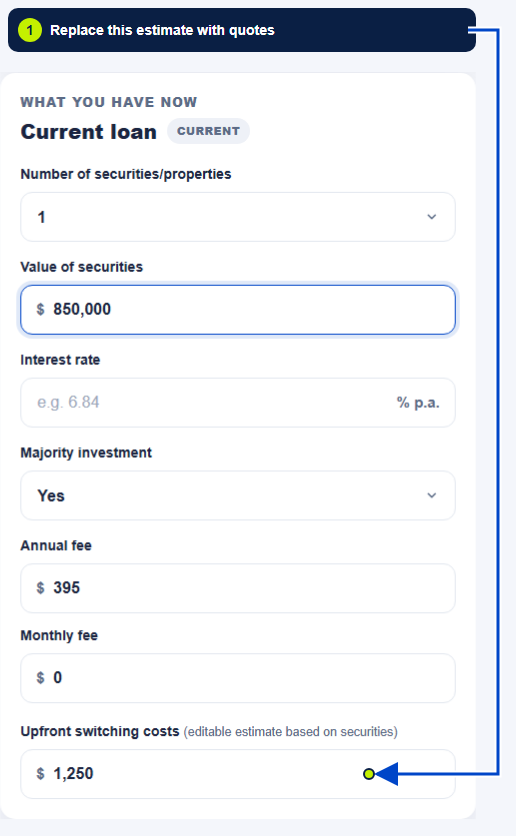
Request the proposed rate, repayment schedule, recurring fees, product features and any cashback terms. Ask both lenders which discharge, application, valuation, settlement and government fees apply. Obtain a dated break-cost quote if a fixed term may end early.
Prepare the evidence the lender requests
Ask for the lender’s document list before collecting more information than you need. It may include identity, income, employment, expenses, liabilities and property information. Self-employed and investment applications may require different evidence.
Review the offer and settlement arrangements
Before accepting, compare the approved rate, balance, term, fees and repayment schedule with the scenario you assessed. Confirm the discharge process, settlement arrangements and any conditions still outstanding.
Your preparation checklist
Ticks are kept only while this page stays open. They are not sent to us or saved after a refresh. Print this page if you want a copy.
0 of 12 checks complete
Sources and calculator limits
Continue exploring
Where will your next move take you?
Calculators and practical guides
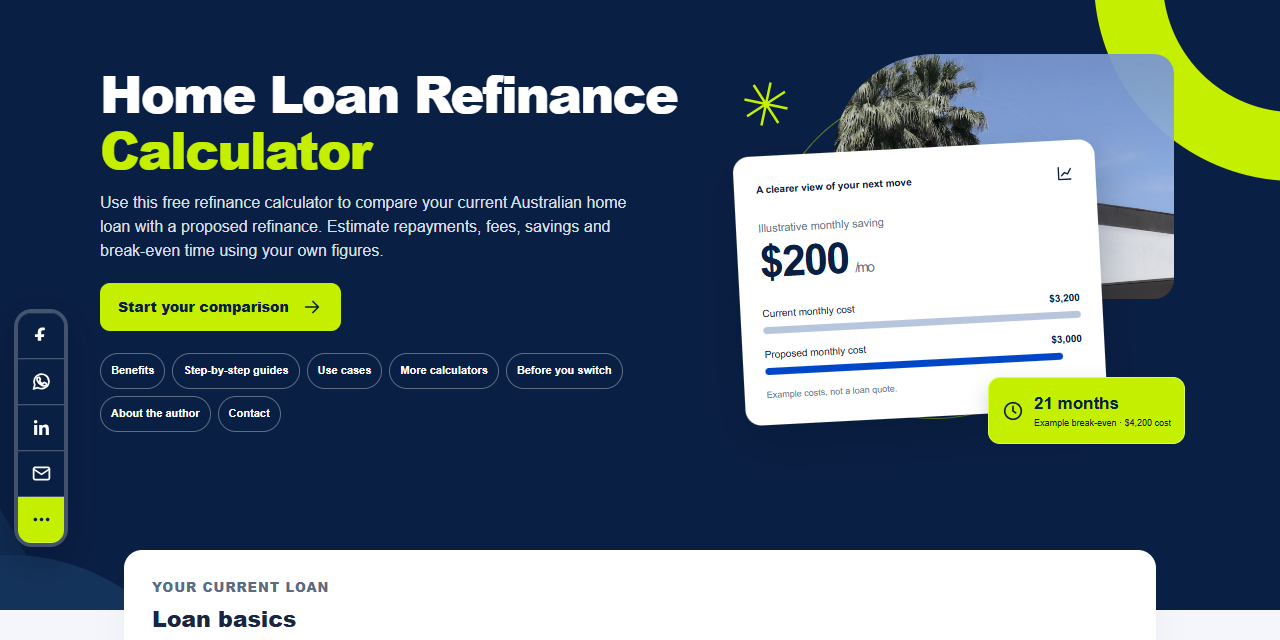
Compare your current loan with a new loan, including repayments, fees and payoff time.

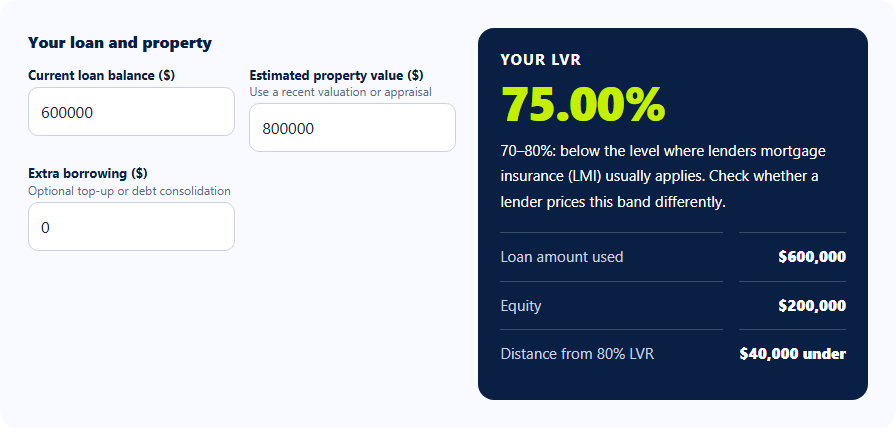
Work out your loan-to-value ratio, equity and distance from 80% LVR.

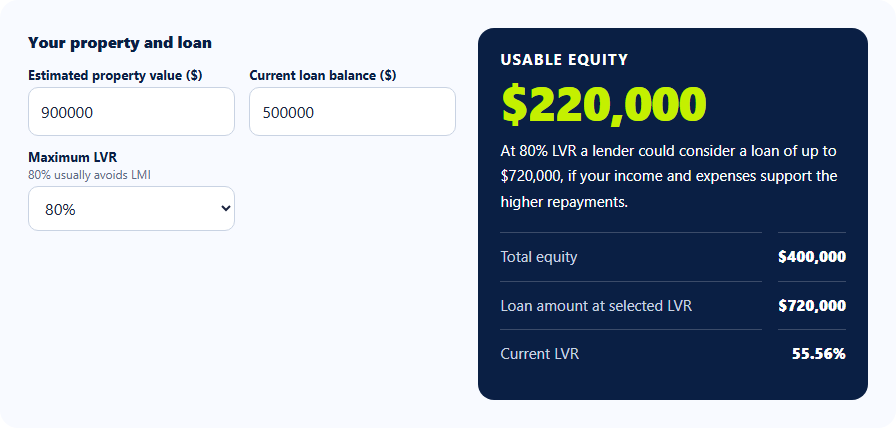
Estimate your usable equity and the loan amount at your chosen LVR.

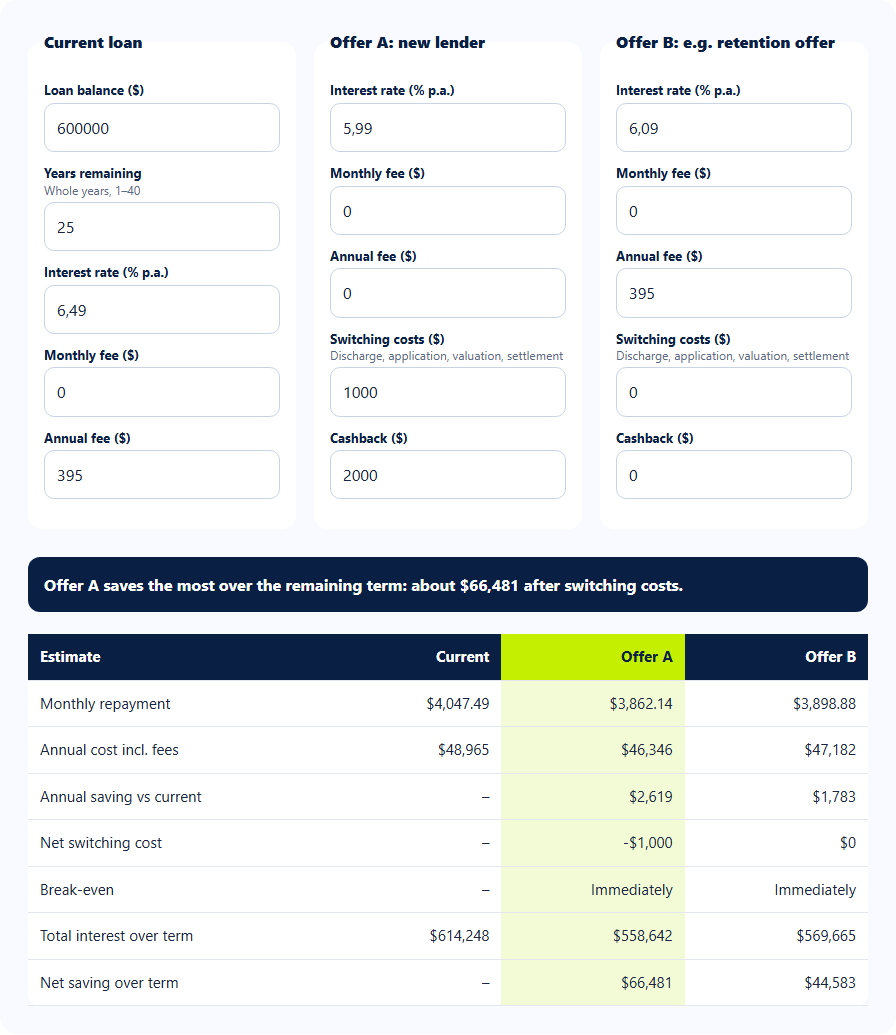
Compare two offers against your current loan, including fees and cashback.

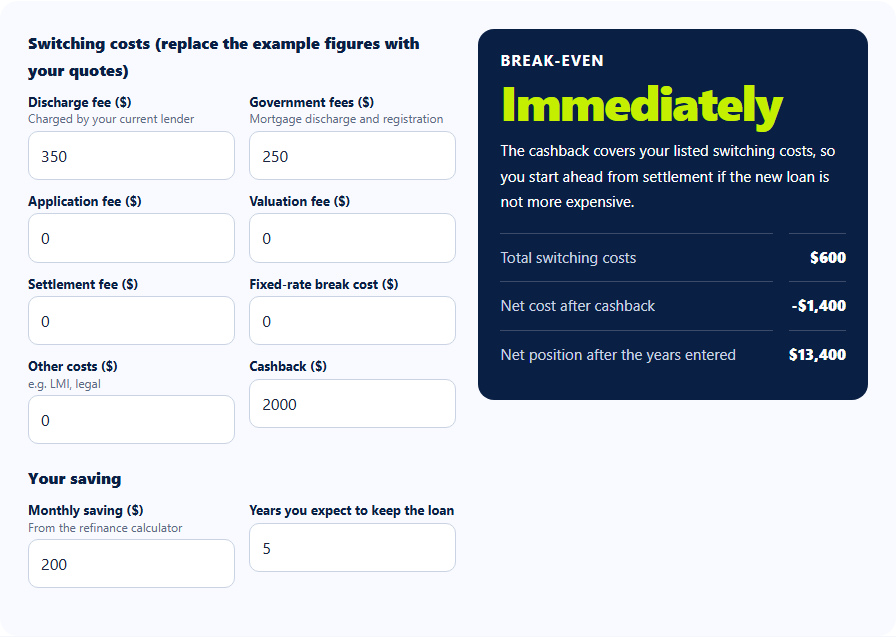
Add up switching costs and estimate how long your savings take to cover them.