Refinance calculators

Refinance LVR Calculator: Check Your Loan-to-Value Ratio

Your loan-to-value ratio (LVR) is your loan balance divided by the property's value, shown as a percentage. Lenders use it to price a refinance and to decide whether lenders mortgage insurance (LMI) applies, which usually happens above 80%.

Your loan and property

Your LVR

–

Loan amount used
–
Equity
–
Distance from 80% LVR
–

Estimates only, based on the figures you enter. This is general information, not credit or financial advice, and not a lender quote. See the calculator disclaimer.

How to calculate LVR for a refinance

Divide the loan amount you want to refinance by the property value the lender accepts, then multiply by 100.

LVR = loan amount ÷ property value × 100. A $600,000 loan on an $800,000 property is a 75% LVR. Borrowing an extra $60,000 at the same time raises it to 82.5%.

Use the amount you will owe after refinancing. If you add switching costs, a top-up or consolidated debts to the new loan, include them, because the lender assesses the new balance.

Why LVR matters when you refinance

  • Interest rate: many lenders price home loans in LVR bands. A lower LVR can give you access to sharper rates or a stronger negotiating position.
  • Lenders mortgage insurance: LMI usually applies when the LVR is above 80%. It is a one-off cost that protects the lender, not you. If you paid LMI on your current loan, it is generally not transferred to a new lender, so a refinance above 80% could mean paying it again.
  • Choice of lenders: fewer lenders compete for refinances above 80% LVR, and above 90% options are limited.
  • Cashback and offers: refinance cashback offers often have a maximum LVR. Check the conditions before you count the cashback in your savings.

Which property value will the lender use?

The lender orders its own valuation, which may be lower than an online estimate or an agent's appraisal. If your LVR is close to a threshold such as 80%, a small difference in the valuation can change the rate you are offered or whether LMI applies. Treat the result above as an estimate until the lender confirms its valuation.

See Moneysmart’s refinancing guide for lender valuations, LMI and switching costs.

If you have more than one property securing the loan, add the values of all the securities and the total of the loans secured by them.

How to lower your LVR before refinancing

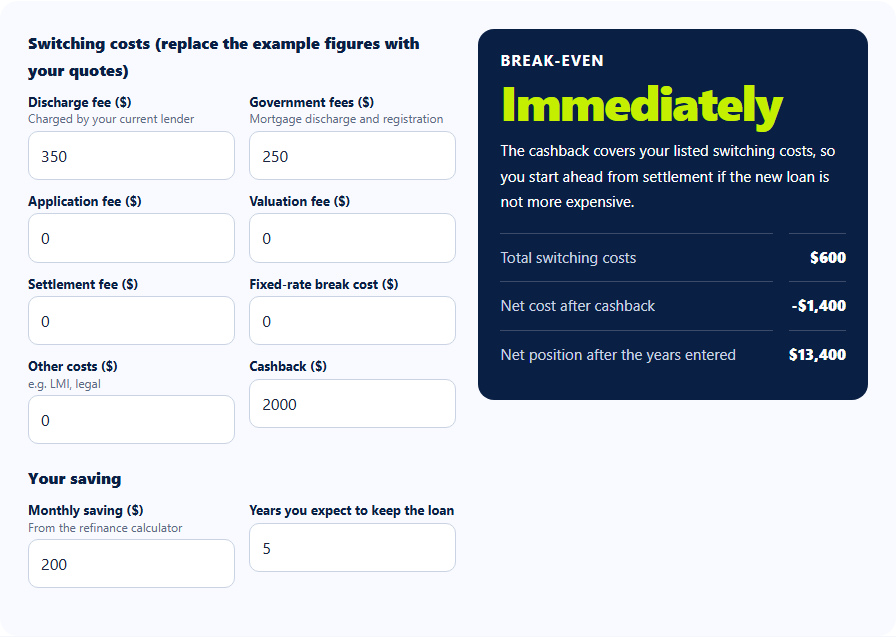
  • Avoid adding costs to the loan: paying switching costs from savings keeps the balance lower.
  • Pay down the loan principal: reducing the loan balance may lower LVR. An offset balance does not automatically reduce the contractual loan amount; ask your lender how it assesses the application.
  • Check the valuation: recent comparable sales can help if you believe a valuation is too low. Ask the lender how it handles valuation reviews.
  • Reconsider extra borrowing: a top-up can push the LVR over 80%. Use the calculator to see the balance that keeps you under it.

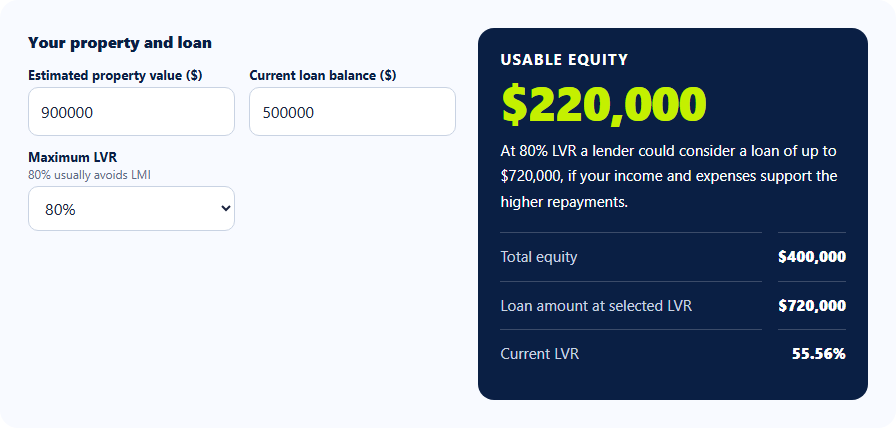
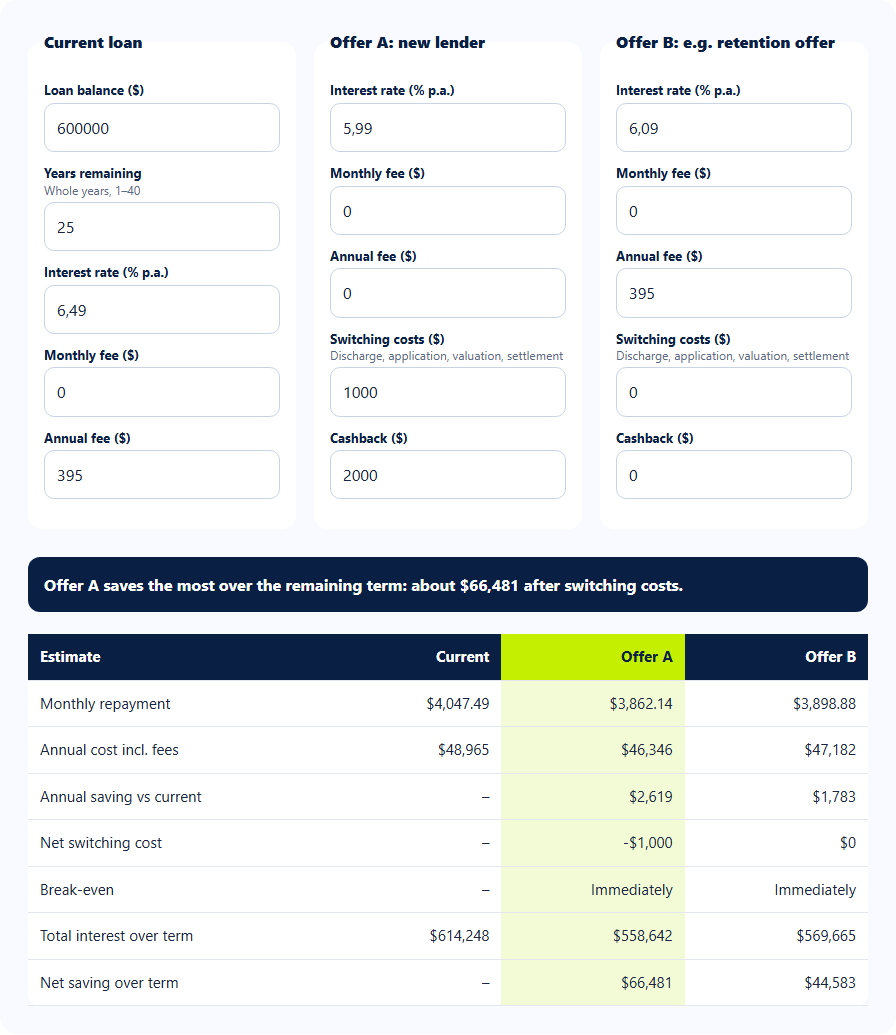
Once you know your LVR, compare your current loan with a new rate to see whether switching saves money after fees, or check how much equity you could access.

Turn the estimate into your next step

Planning a top-up? Follow the investment-property refinance guide to check proposed borrowing and purpose. Use the refinance checklist to collect the valuation and loan figures you will need.

Frequently asked questions

What is a good LVR for refinancing?

An LVR of 80% or less is generally the most useful target, because LMI usually applies above it. A lower LVR, such as 60% or 70%, can strengthen your position when you negotiate a rate.

Can I refinance with an LVR above 80%?

Some lenders will refinance above 80% LVR, usually with lenders mortgage insurance and a narrower choice of loans. Ask for the LMI cost in writing and include it in your switching costs.

Does LVR change after I refinance?

Yes. Your LVR falls as you repay the loan and as the property value rises, and it increases if you borrow more. Rechecking it every year or two can show when you may qualify for a better rate band.

Is LVR calculated on the purchase price or current value?

For a refinance, lenders use the current value from their own valuation, not the price you paid. That is why your refinance LVR can be lower than your original LVR if the property has increased in value.

Does this LVR calculator tell me my interest rate?

No. It shows your LVR and equity only. Lenders set their own rate bands and credit criteria, so confirm pricing with the lender or a broker.

Portrait of Sana Hosseni

Sana Hosseni is a mortgage broker with more than 23 years of experience and an elected director of the MFAA Board. More about Sana and these calculators.

Continue exploring

Where will your next move take you?

Choose the calculator or guide that helps you understand your next refinance decision. Browse all calculators or explore the guides.